
















Oracle Health EHR Integration with Microsoft Dynamics 365 ERP
Application Integration

Overview
As part of its modernization strategy, a leading healthcare provider in the Middle East migrated its financial and supply chain operations to Microsoft Dynamics 365 Finance & Supply Chain Management (F&SCM). To eliminate silos between clinical care and business operations, the organization sought to integrate Oracle Health EHR with Dynamics 365, enabling real-time synchronization across billing, inventory, and procurement processes.
The Challenge
Key challenges included:
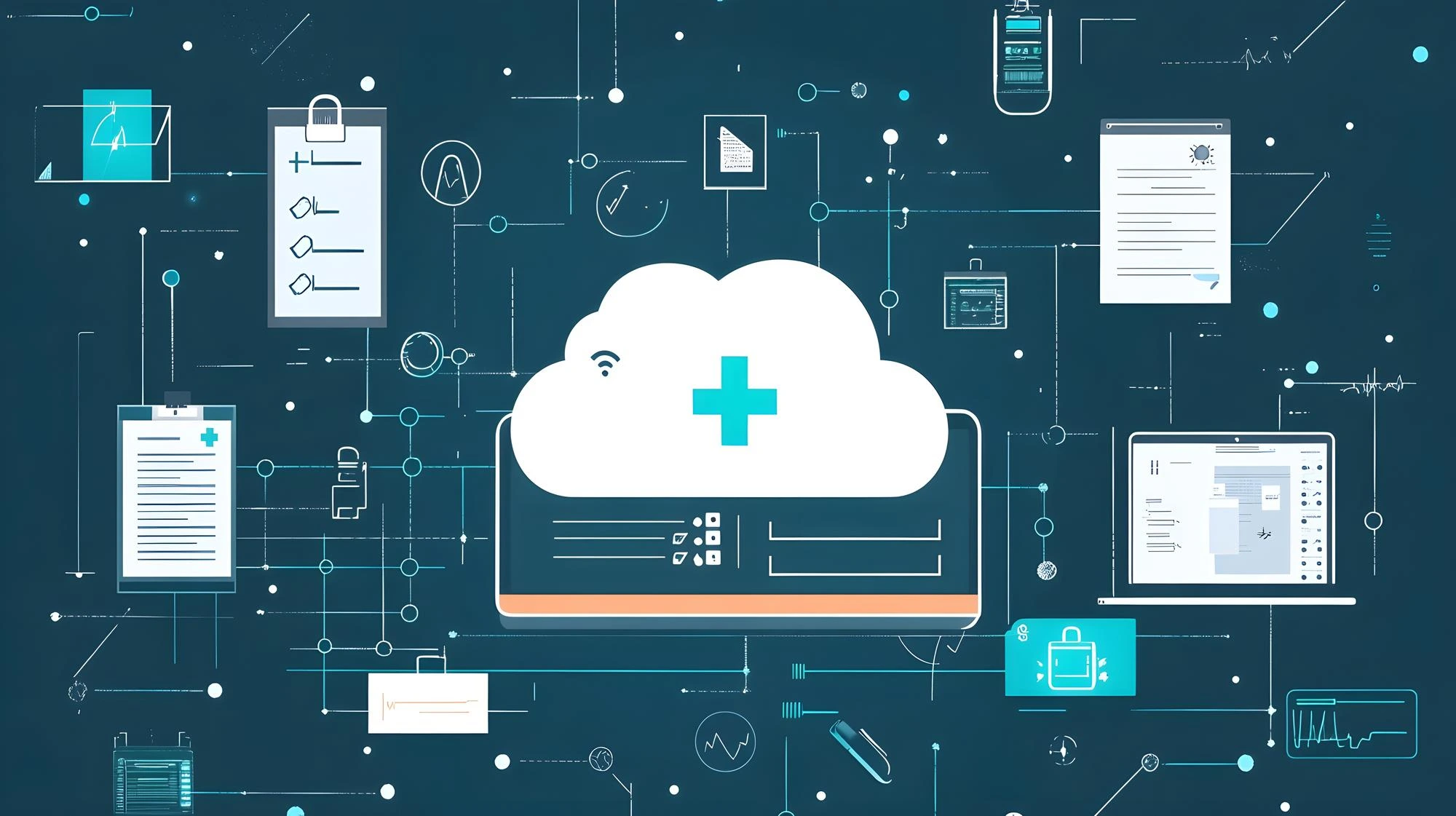
- Manual transfer of clinical data into ERP systems caused delays in billing and revenue collection.
- Lack of real-time visibility into inventory led to stock inaccuracies, stockouts, and procurement inefficiencies.
- Financial teams struggled to correlate clinical activity with financial performance, limiting transparency and control.
- Aligning Oracle Health’s clinical data models with Dynamics 365’s financial and supply chain models.
- Ensuring secure, regulatory-compliant data exchange across critical healthcare and financial systems.
- Managing latency and maintaining performance for high-volume transactions.
- Establishing governance for master data synchronization between EHR and ERP.
The Objective
The key objective of this initiative included:

- Eliminate disconnect between clinical and operational data by enabling real-time integration.
- Automate billing, inventory, and procurement workflows to reduce manual intervention.
- Improve financial visibility by correlating clinical events with financial outcomes.
- Establish a secure, compliant, and scalable integration framework.
The Solution
Tellestia implemented an event-driven, API-led integration using WSO2 between Oracle Health EHR and Dynamics 365 ERP. Key features included::
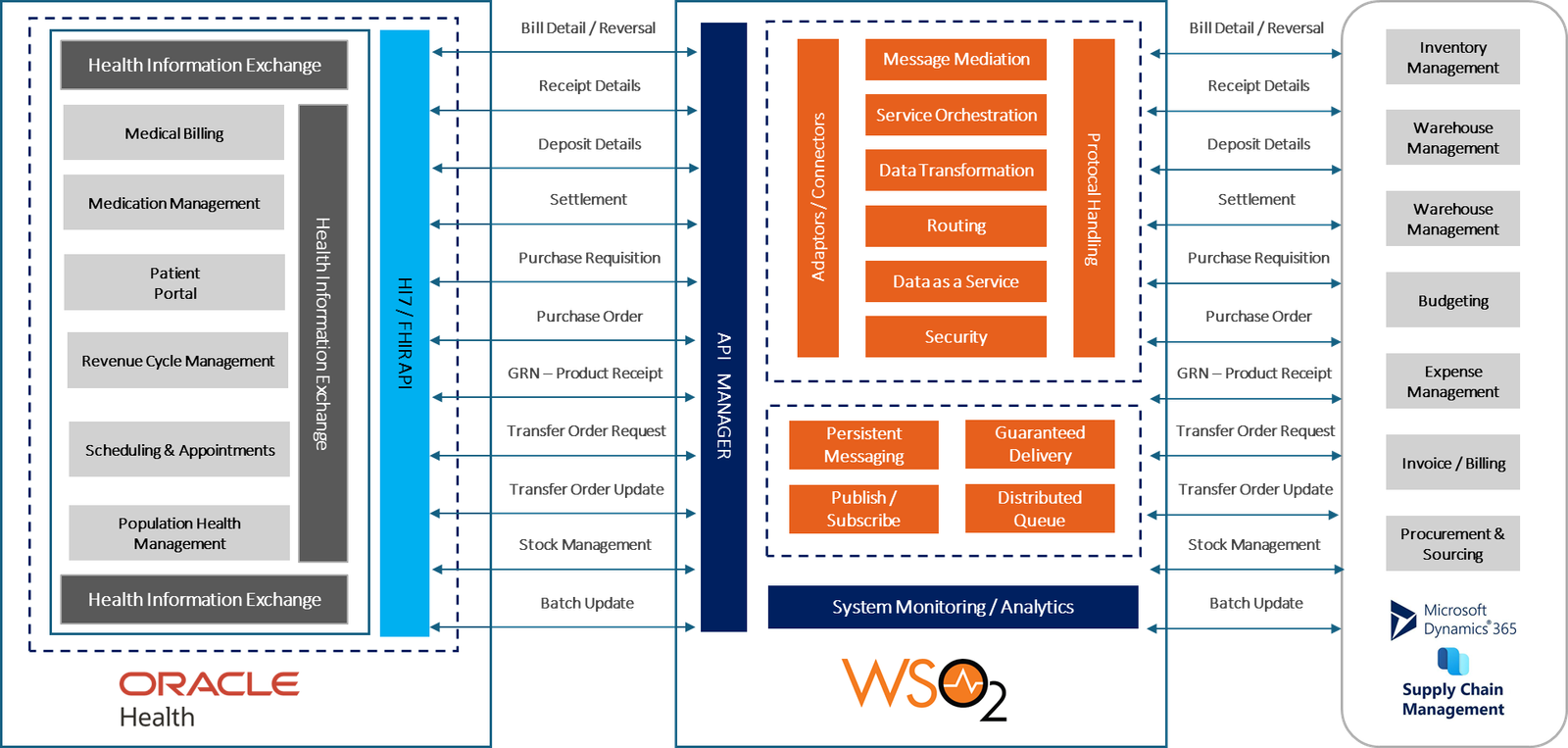
- Middleware Integration: WSO2 API Manager and WSO2 Enterprise Integrator served as the backbone for secure, real-time connectivity.
- Bi-Directional APIs: Connected Oracle Health FHIR and proprietary APIs with Dynamics 365’s RESTful and OData APIs.
- Core Workflows Delivered:
- Charge Capture & Billing Automation: Automated invoicing by transferring encounter and supply data from EHR to ERP in real-time.
- Inventory Consumption & Replenishment: Synced clinical supply usage with ERP inventory, triggering automated replenishment workflows.
- Vendor & Product Master Synchronization: Ensured consistent master data across clinical and financial systems.
- Security & Compliance: Implemented OAuth 2.0 authentication, encrypted data exchange, and full audit trails for regulatory adherence.
The Impact
The integration solution delivered immediate, impactful results:

- Accelerated Revenue Cycle: Automated billing minimized delays, reducing administrative costs.
- Real-Time Inventory Visibility: Prevented stockouts and optimized procurement.
- Financial Transparency: Linked clinical activity with financial data, providing a unified performance view.
- Operational Efficiency: Eliminated manual reconciliations and improved data accuracy across systems.

Let’s Get Started on Your Transformation Journey.
You Might Also Like

Transforming Insurance Operations with Salesforce and WSO2 Integration in the Middle East
A leading insurance provider in the Middle East, our client serves individuals, businesses, and government entities with a comprehensive portfolio...
Read Story
Fueling Government Innovation with MuleSoft-Powered Digital Integration
A leading public sector entity recognized the need to address functional silos, data duplication, and interoperability challenges to improve operational...
Read Story
Enabling Agile Real Estate Operations through Enterprise-Grade iPaaS Integration
A leading UAE-based real estate developer partnered with Tellestia to modernize its IT infrastructure through a scalable, secure, and efficient...
Read Story